The 3 Pillars for AI Success

By Maxime Lavoie2026-08-111 min read

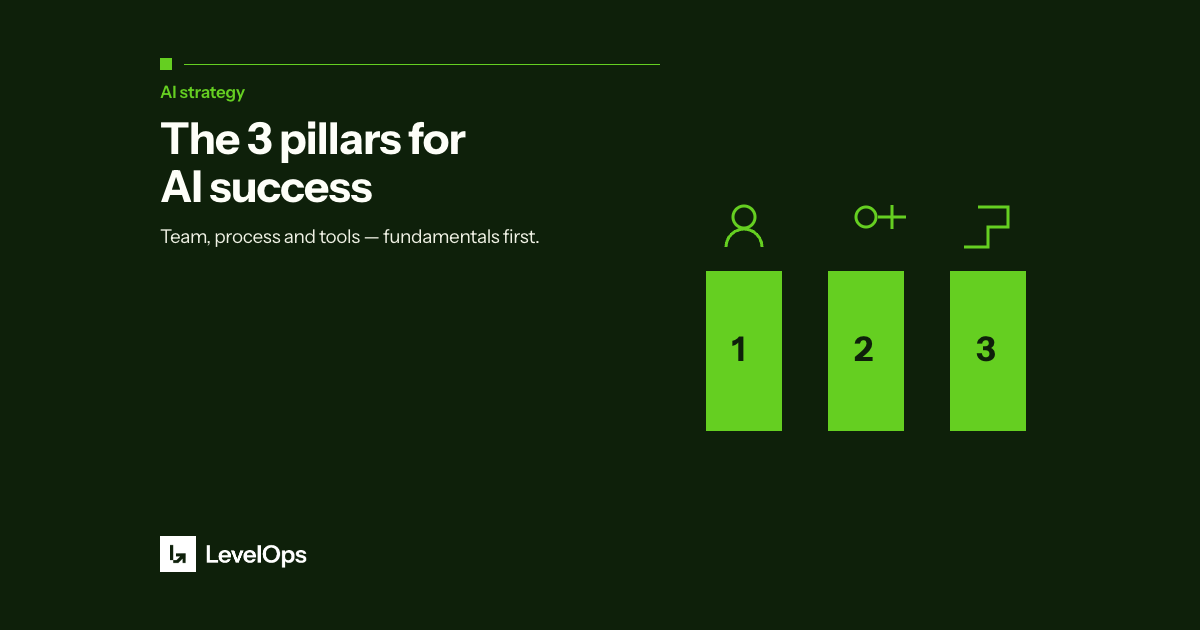
LevelOps' Operational Excellence framework for AI success: Team, Process, and Tools. Before bringing in AI, get the fundamentals right.

LevelOps' Operational Excellence framework for AI success: Team, Process, and Tools. Before bringing in AI, get the fundamentals right.

Before Artificial Intelligence, You Need Organizational Intelligence

Most AI implementations fail not because the technology doesn't work, but because the organization isn't ready for it. That's why LevelOps created an Operational Excellence framework specifically designed to help companies build the right foundation for AI success.

The framework has three pillars, and they need to be addressed in order.

‍

Pillar 1: Team

Success starts with people. You need clear accountability, trust, and a culture that values results over effort. Without team alignment, AI becomes an accelerator of dysfunction rather than performance.

‍

Pillar 2: Process

AI thrives in structured environments. Define, measure, and continuously improve how work gets done before you automate it. Automating a broken process just makes the problems happen faster.

‍

Pillar 3: Tools

The right tools don't just automate, they enhance value. Choose technologies that are ROI-driven and that your team will actually use. Implementation without adoption is waste.

‍

Why This Matters

We share this methodology with every company we support, to ensure AI implementation becomes a success, not an accelerator of chaos. If you'd like to evaluate where your operations stand, Maxime offers a free operational audit.

Maxime Lavoie

Founder & CEO, LevelOps

Industrial engineer by training. Former Deloitte supply-chain consultant. Former VP Operations at Goodfood Market. Now writes the ERP, MRP and B2B order playbooks he wishes had existed in 2018.

Questions this article gets

What does organizational intelligence mean before artificial intelligence?

It is the readiness that has to exist before a model or an app can help you. The argument here is that most AI projects fail because the organization was not ready, not because the technology did not work. Team, process and tools are the three things you can settle ahead of time.

Why do the three pillars have to be addressed in order?

Each one depends on the one before it. Team comes first because people who are not aligned will not carry a change. Process comes second because automation needs something structured to run on. Tools come last, since a tool bought before either of those is in place has nothing solid to sit on.

What does it mean that AI can accelerate dysfunction rather than performance?

Automation does not judge the work it repeats. Point it at a process with unclear ownership or a step that produces errors and you get the same result faster and more often. That is why readiness is treated as a prerequisite rather than a nice to have.

Where does an order automation tool fit in this framework?

In the third pillar, tools, and only once accountability and the process are settled. LevelOps PDF to Order is an example of the shape to look for: it reads the purchase orders customers already send and turns them into Shopify draft orders that a person reviews and approves. The pillar's test is still adoption, because a tool nobody uses is waste however good it is.

How do we find out which pillar is our weakest?

Each pillar has its own test. Would you re-hire every member of your team today, can you show the objectives and KPIs for how work gets done, and are the tools you already bought actually used. The one you cannot answer cleanly is where to start. Maxime also offers a free operational audit if you want an outside read.

Turn emailed orders into Shopify draft orders

Book a short demo with a real purchase order and we run it live on your own data.