Company

From a maple farm to a Shopify app

The founder's career, told period by period. A family sugar bush, tree planting in Western Canada, industrial engineering, six years of supply chain consulting at Deloitte, six more running operations and engineering at Goodfood Market, then Obius and the rename to LevelOps. How we work, and what we believe, lives on the company page.

The founder's story

Fifteen years of asking one question, in four very different rooms

LevelOps was founded by Maxime Lavoie. Industrial engineer by training, six years of supply chain consulting at Deloitte, then Vice President of Operations and later Engineering at Goodfood Market (TSX: FOOD). The product did not come out of a market study. It came out of this sequence, in this order.

  1. Chapter 1

    Before 2006

    A family maple farm in Quebec, and the cutblocks of Western Canada

    The first operations he ever worked in ran on a season and no software at all

    Every origin story has a place where the instincts get set. This one starts in a sugar bush.

    Maxime Lavoie grew up in a house where food organised the year. His mother kept a garden that fed the family through the summer and the autumn. The winters were spent at the family maple farm, getting ready for a season that arrives when it decides to and lasts a few weeks.

    Nobody there uses the word throughput, but a sugar bush is an operation and it behaves like one. A perishable input. A hard capacity limit. A schedule set by weather rather than by plan. A quality standard a customer can taste. The wrong sequence in the wrong week costs the year, and no amount of effort in April buys back a week lost in March.

    The other classroom was farther west. Before university he planted trees in Western Canada: piecework, weather, a daily count, and a crew that either hit the quota or did not. There is no dashboard on a cutblock. You know by the end of the day whether the work happened, and you know it in your back.

    That is the earliest version of the thing this whole page is about: the difference between working hard and working in the right order.

    The sugar bush
    A family maple farm in Quebec. A spring deadline, a perishable input, and no software at all.
    Tree planting
    Western Canada, before university. Piecework on a cutblock, counted at the end of the day.
    “Food was always important in our family. My mom kept a garden and we would eat fresh vegetables all throughout the summer and autumn. During the winter, we would spend most of our time at the maple farm preparing for the spring season.”
    Maxime Lavoie, 2022, Goodfood blog
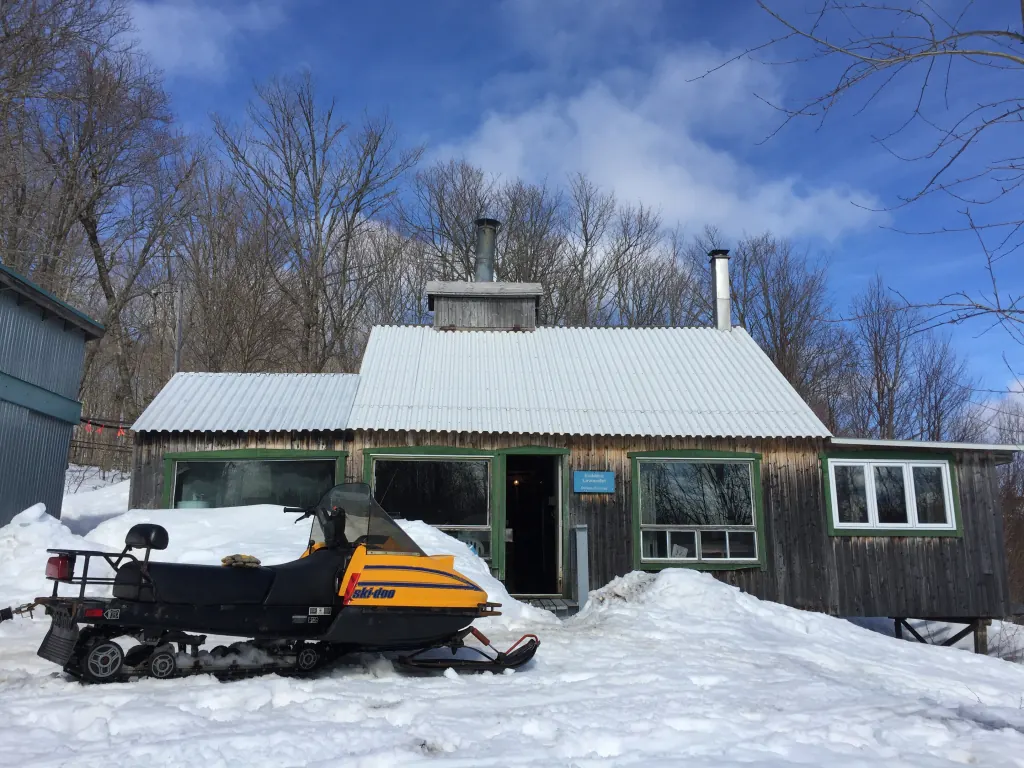
    The sugar shack in winter, with a Ski-Doo parked in the snow
    The sugar shack
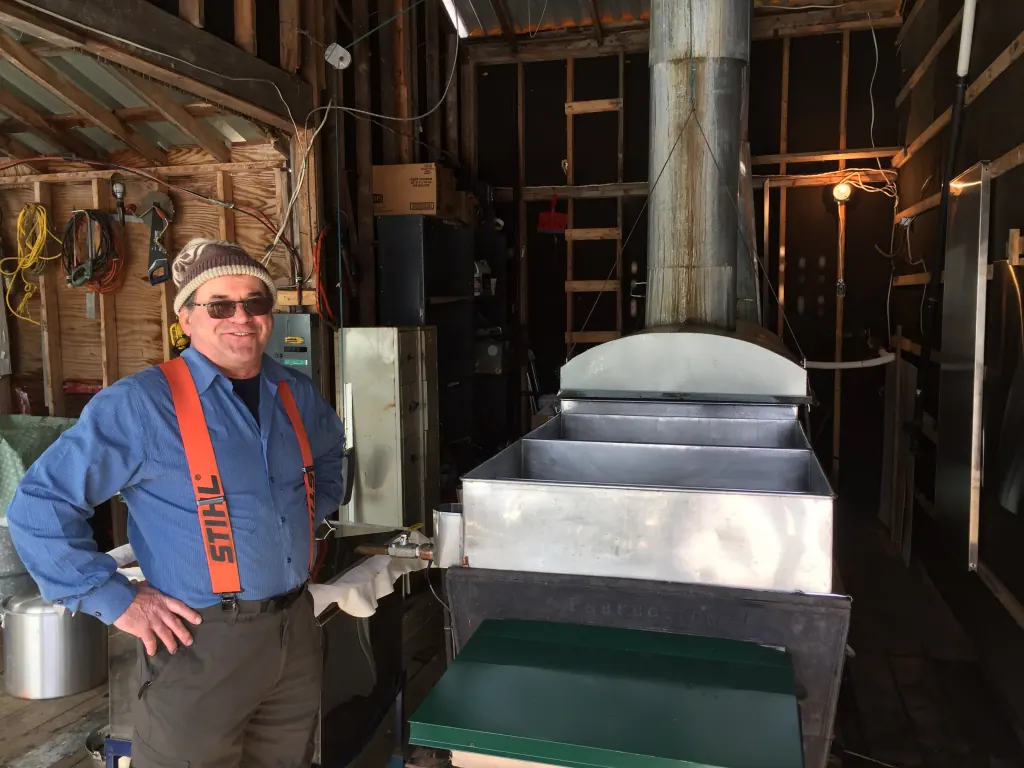
    Maxime's father at the evaporator in the sugar shack
    Maxime's dad at the sugar shack.
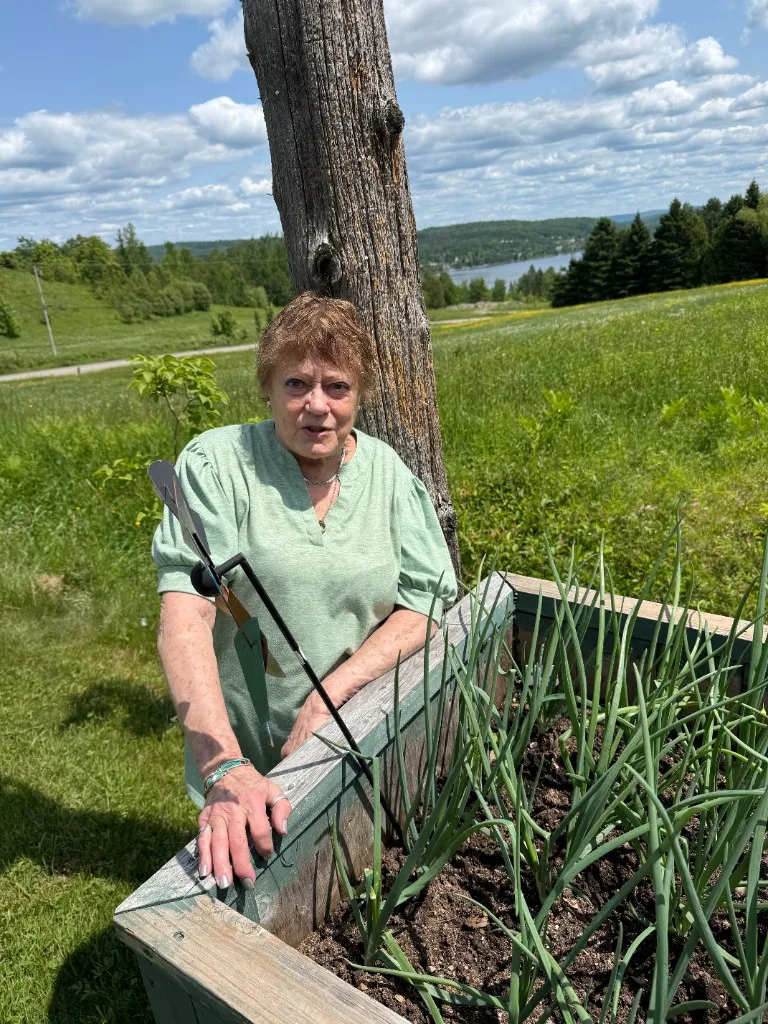
    Maxime's mother at her garden, standing by a raised vegetable bed
    His mother's garden, mid summer
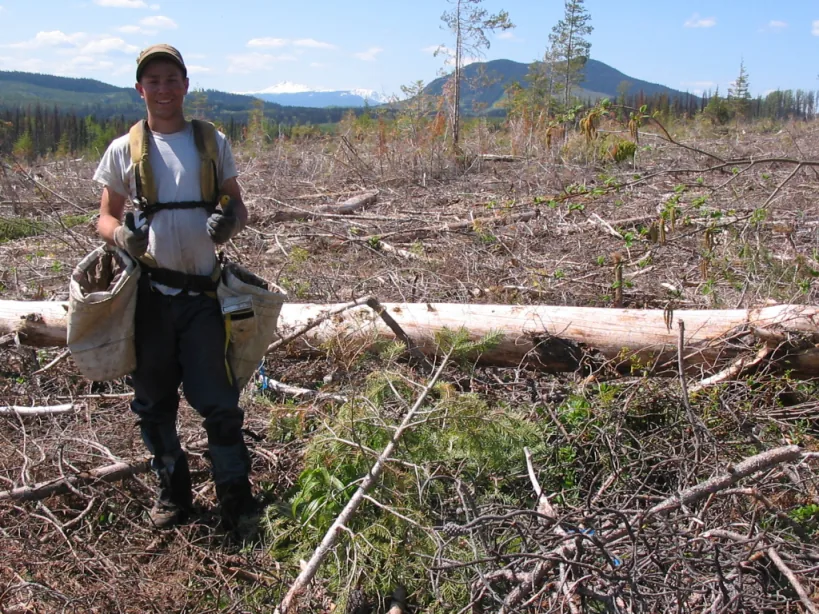
    Maxime on a cutblock in Western Canada during a tree planting season
    Tree planting, Western Canada
  2. Chapter 2

    2006 to 2010

    Polytechnique Montréal, and the first engineering internships

    University, the first internships, and German learned on the job in Stuttgart

    From 2006 to 2010 the work was mostly school: industrial engineering at Polytechnique Montréal, process optimisation, production planning, logistics. The part he still uses every week is none of those three. It is the structured approach to a problem, which is a way of looking rather than a technique you can put on a slide.

    Industrial engineering is the discipline of how work flows. Not the design of the product and not the selling of it, but the arrangement of steps, people, machines and information that turns raw material into something a customer receives.

    What the training gives you is that way of looking. A business is a system. A system has a constraint, and the constraint sets the throughput of the entire thing, which means that improving anything else feels productive and changes nothing. Work spends far more of its life waiting in a queue than being worked on. Every handoff is a place where information gets copied, and every copy is an opportunity to be wrong. If you want to know where the time goes, you measure the process rather than ask the people running it, because nobody is a reliable narrator of their own workday.

    The first internships put that lens in rooms that had nothing in common. One of them was at Porsche headquarters in Stuttgart, on supply chain systems, inside a manufacturing culture that treats a production line as an engineered object rather than a room that happens to contain machines. He learned German while he was there. Another was in the project management office at Bombardier in Montreal, where an aircraft programme is a supply chain with a decade inside it and a parts list in the tens of thousands.

    Every chapter after this one is the same lens pointed at a larger system. It is also why an engagement here starts by counting, and why we are suspicious of a solution that shows up before the measurement does.

    University, 2006 to 2010
    B.Eng. industrial engineering, Polytechnique Montréal. Process optimisation, production planning and logistics.
    Porsche AG, Stuttgart
    Internship at headquarters, on supply chain systems, while learning German.
    Bombardier, Montreal
    Internship in the project management office. Aerospace, where a late part is a grounded programme.
    What stuck
    Measure the process instead of asking the people running it. Nobody is a reliable narrator of their own workday.
    Polytechnique Montréal campus during the engineering years
    Polytechnique Montréal
    Porsche headquarters in Stuttgart, where he interned on supply chain systems
    Porsche, Stuttgart
    Maxime in Stuttgart while learning German
    Learning German, Stuttgart
    Maxime at Bombardier during an engineering internship
    Bombardier, Montreal
  3. Chapter 3

    2011 to 2017

    Deloitte Canada, Montreal

    Inside other people's supply chains, building the map of where the typing happens

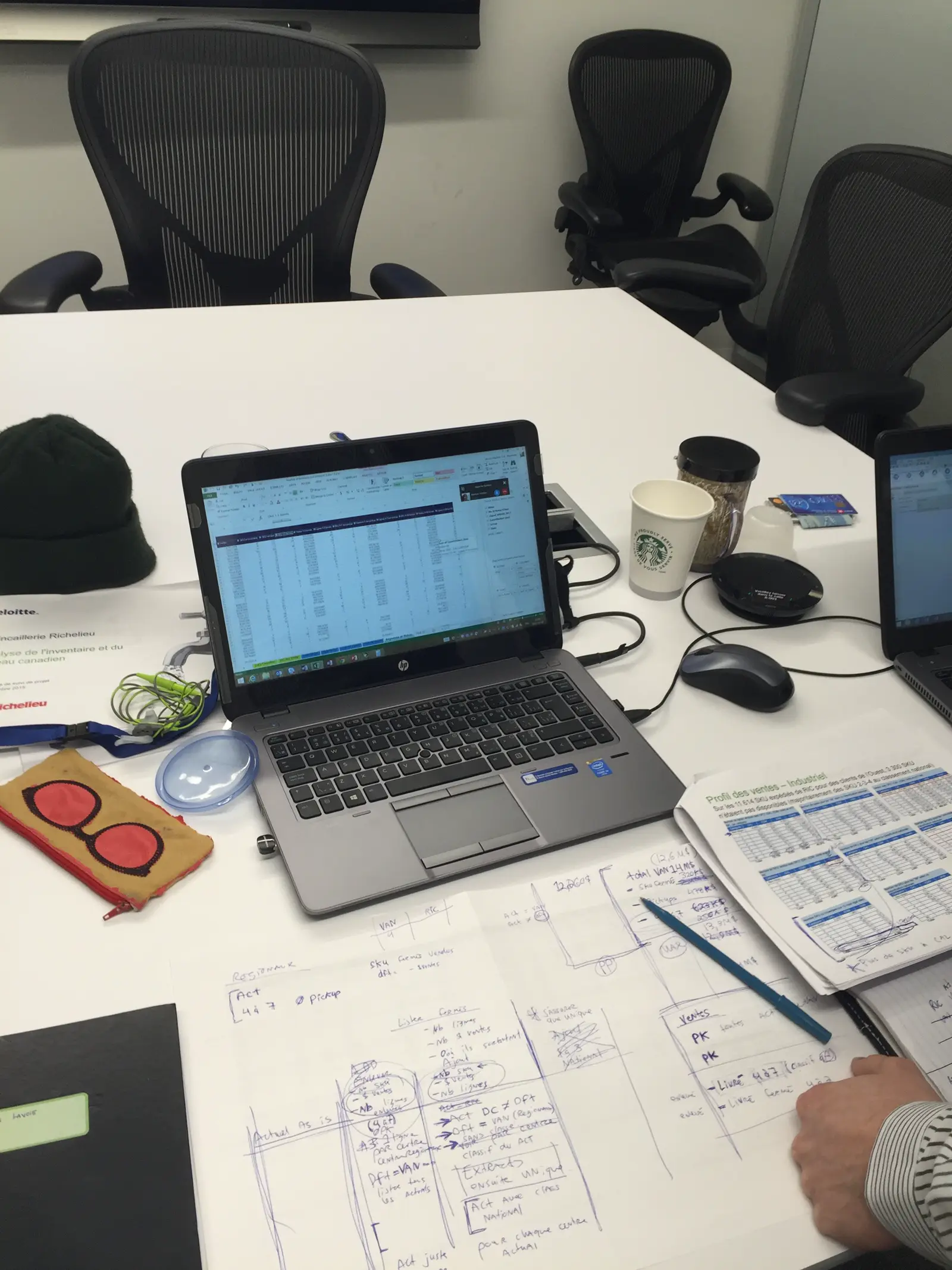
    Business analyst, then consultant, then senior consultant, in the part of the practice where the deliverable is a working distribution network rather than a strategy document. Warehouse management system selections and rollouts for grocery and fashion retailers. Business cases and warehouse design for automated distribution centres. Transportation and network design for supplement makers and pharmaceutical distributors. The kind of network where one decision moves hundreds of locations and a rounding error in a forecast is a truckload.

    What any of that work found, and what it produced, is not ours to publish. Consulting is confidential and stays that way. The education is a different matter.

    The first lesson is scale. A distribution network reads as a tidy diagram until you stand inside one. Then you see that the flow is not a river but hundreds of small streams with different rules: direct to store, cross dock, a category with its own replenishment logic, a supplier who is late every February. Nothing about it is uniform, and the averages in the report hide the exceptions that eat the week.

    The second lesson is that most supply chain problems are data problems in a costume. The forecast is wrong because the item master holds three versions of the same product. The store is out of stock because the case pack in one system is not the case pack in the next one. The replenishment engine is fine. What is feeding it is not.

    The third lesson is where the manual seams are, and this one eventually turned into a company. Inside a business, software talks to software. Between two businesses, a supplier and a retailer, a brand and a distributor, somebody opens an attachment and types. Automation tends to stop precisely at the company boundary, on both sides, at exactly the point where the volume is highest. Six years of looking at that produces a fairly complete map of where the typing happens.

    Warehouse management systems
    Selection and implementation for grocery and fashion retail, including Loblaws with Pharmaprix and Shoppers Drug Mart, Metro, Walmart, ALDO and Hudson's Bay.
    Automated distribution centres
    Business case analysis and warehouse design for retailers and distributors, including Richelieu Hardware, PiSA Farmacéutica and American Airlines.
    Transportation and network design
    Optimisation work for Atrium Innovations, the Quebec supplements group Nestlé later acquired, and for pharmaceutical distributor Groupe Jean Coutu.
    What is publishable
    The client names and the type of mandate. Never the findings, the numbers or the designs. Six years of that discipline is also why we are careful with what merchants let us quote today.
    A retail distribution centre floor during a warehouse management system rollout
    Go live week, retail distribution centre
    Warehouse layout drawings from an automated distribution centre business case
    Automated DC design work
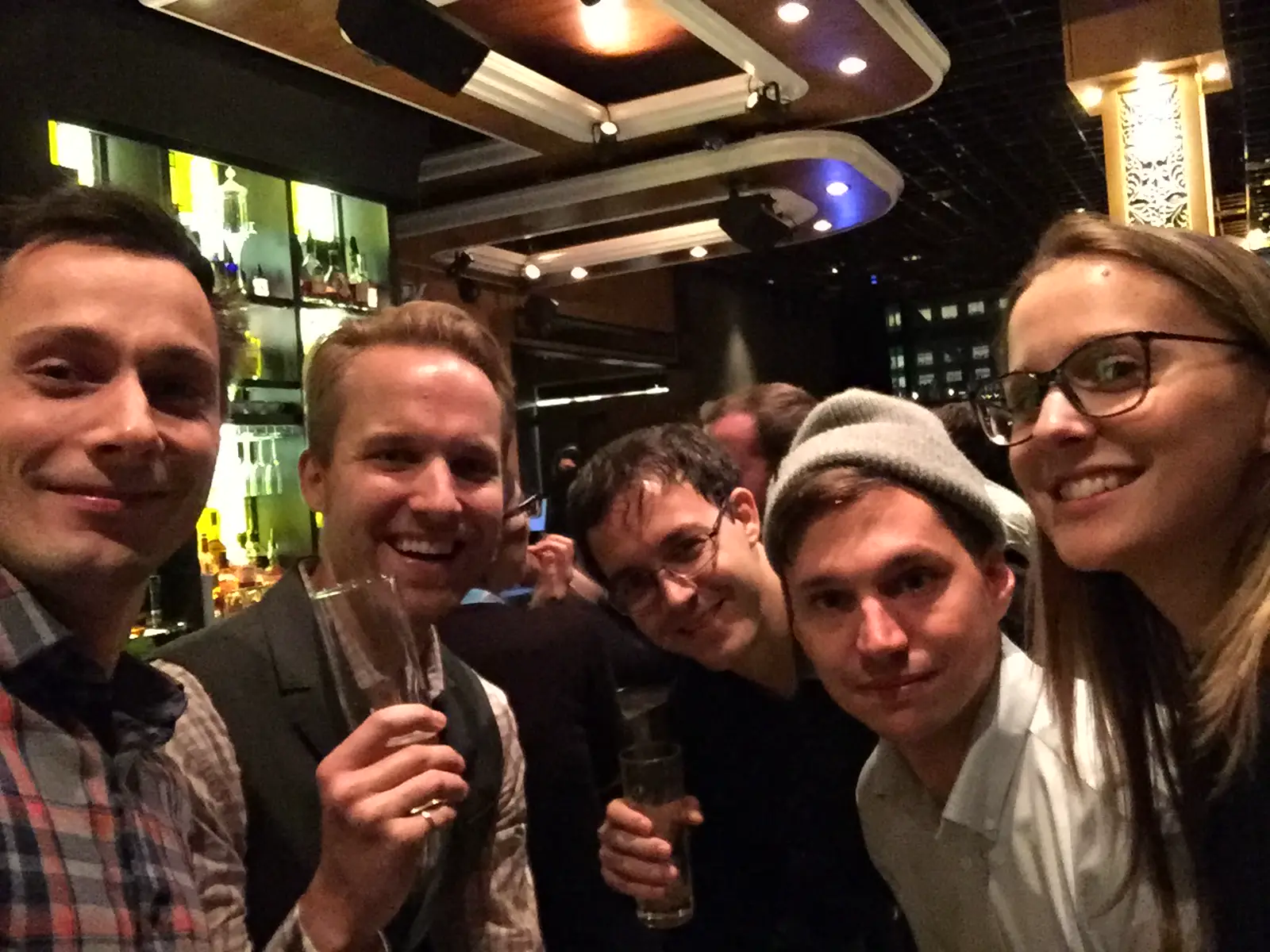
    Maxime with colleagues during the Deloitte years
    The Deloitte years
    The Deloitte Montreal office in the mid 2010s
    Deloitte, Montreal
  4. Chapter 4

    2017 to 2023

    Goodfood Market (TSX: FOOD), Montreal

    Six years where the recommendation and the consequence belonged to the same person

    Advising and operating are different jobs. At Goodfood there was no client to hand the deck to. He arrived in January 2017, the year the company went public, as VP Operations, and left six years later as VP Engineering.

    The growth is the part people ask about and the least useful part on its own. Sales went from $23M in fiscal 2017 to $379M in fiscal 2021. The number he is actually proud of is the other one: gross margin from 18.1% to 30.3% between fiscal 2017 and fiscal 2020. The first number is mostly demand. The second one is entirely operations.

    Growth is an audit nobody asked for. Every manual step that was perfectly reasonable at one volume becomes the constraint at ten times the volume, and it fails in the same order every time. First it gets slower. Then it needs a second person. Then it needs overtime. Then it starts producing errors that cost more than the labour ever did. A spreadsheet that one person maintained quietly becomes infrastructure that the business cannot take a vacation from. None of this appears as a line in a budget. It appears as a team that is permanently a day and a half behind.

    So he automated it himself, years before there was an ERP to do it. Sales forecasting, production planning, KPI calculation, inventory management: robotic process automation scripts written in Alteryx, doing the pulling, joining and recalculating that four people would otherwise have done by hand every morning. Goodfood ran its operations that way until he implemented Microsoft Dynamics 365, at roughly $250M of annual revenue.

    That is the genesis of LevelOps, and it is worth being precise about what the lesson was. Not that automation is good. Something narrower and more useful: the expensive part of an operation is rarely the work itself, it is the moving of information between the places the work gets recorded. A script that does the moving buys back a morning a day, and it does not need a systems project or a budget cycle to exist.

    The other thing that arrives with volume is documents. Orders, supply commitments, price changes and forecasts turn up in whatever format the sender happens to use, and none of it is in a shape a system can read. So somebody keys it in, between other tasks, from a screen. That was the daily operating reality on the receiving end of a supply chain at a food manufacturer, and it is the same problem LevelOps now solves for wholesalers, from the other side of the same transaction.

    He was also already clear about the limit. Asked in 2022 whether automation was going to replace the people on the line, he said no, and said why. Every order PDF to Order produces still stops at a draft for a person to approve. That is the same position, restated in software, years later.

    Team
    Operations grown from roughly 100 people to 2,000 in three years, with seven direct reports.
    Production
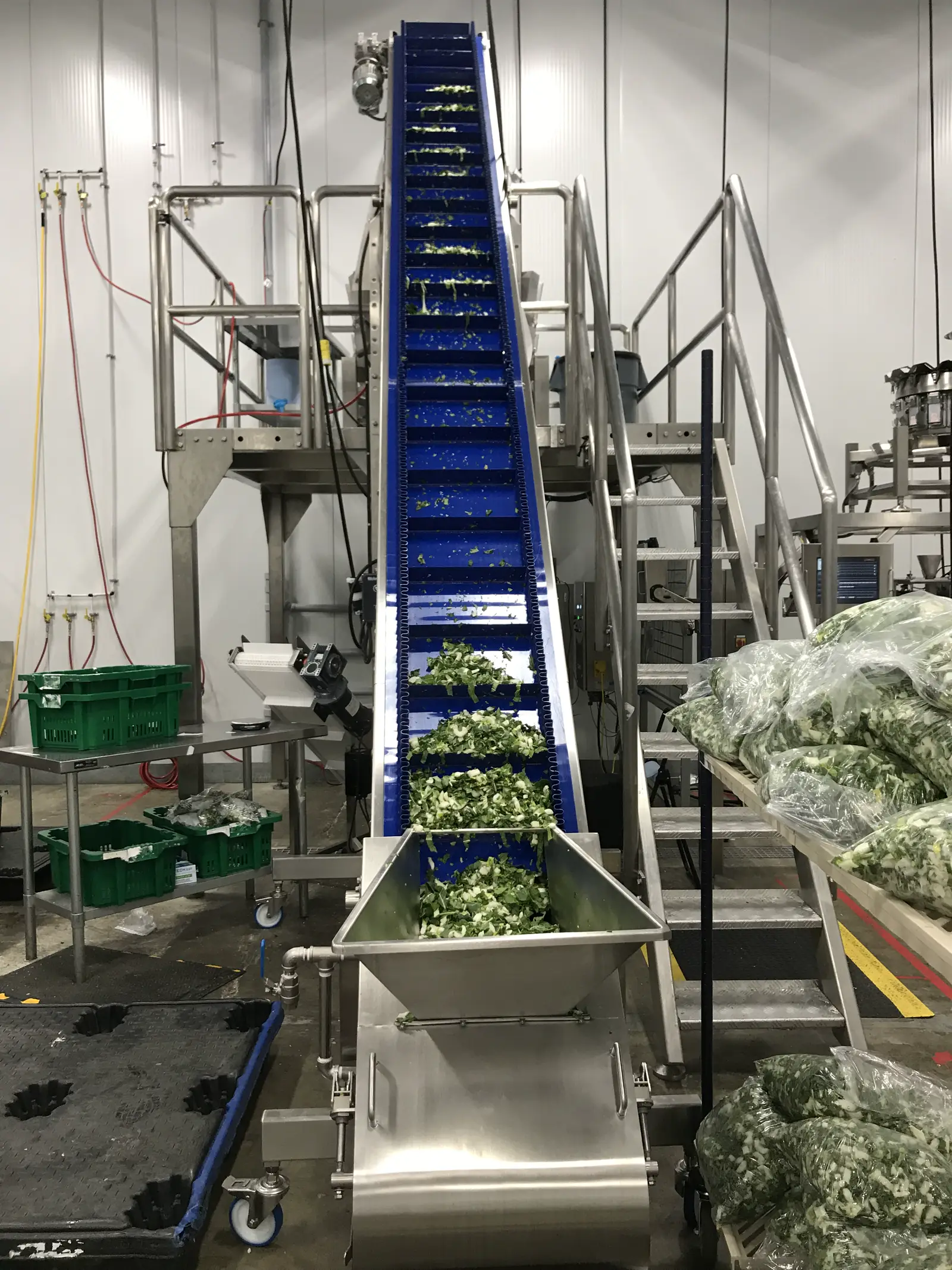
    A food production facility taken from 10,000 to 100,000 square feet, with manual portioning and assembly moved onto automated lines.
    Goodfood WOW
    Nine cloud stores designed and launched in nine months, for 30 minute delivery across the Toronto and Montreal areas.
    Capital projects
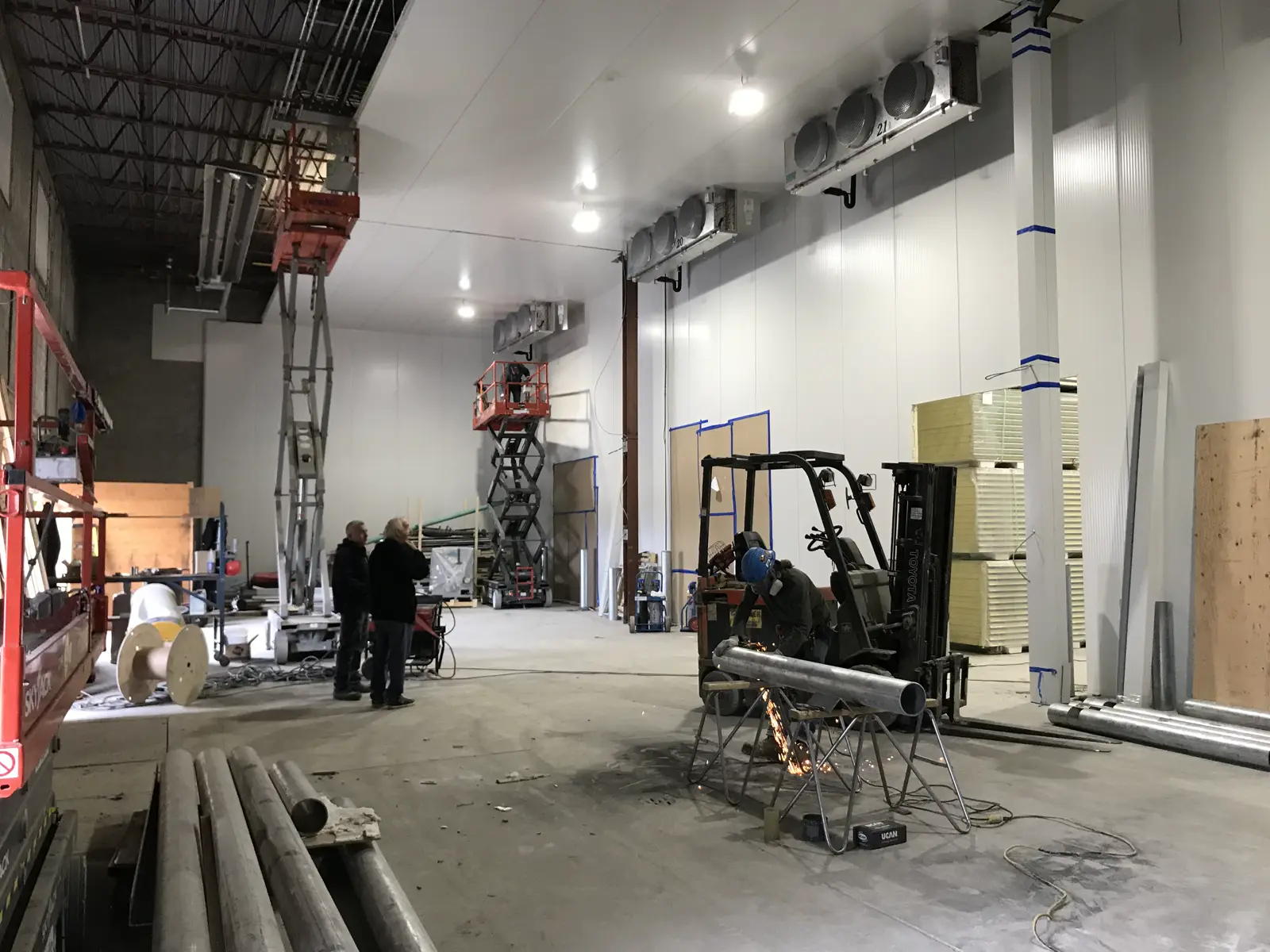
    $50M of capex and 15 major engineering projects in 24 months, including five distribution and production facilities: Vancouver, Toronto, Ottawa and two in Montreal.
    Margin
    Gross margin from 18.1% in fiscal 2017 to 30.3% in fiscal 2020, on sales that went from $23M to $379M by fiscal 2021.
    Systems
    Run on Alteryx automations and spreadsheets until Microsoft Dynamics 365 went in, at roughly $250M of annual revenue.
    “Goodfood will always require a skilled team handling our fragile ingredients and ensuring that the best quality is sent to our members. Automation will allow us to portion less complex ingredients more quickly, easily and cost-effectively while the team can focus on more critical ingredients.”
    Maxime Lavoie, 2022, Goodfood blog
    Portrait of Maxime Lavoie seated on a sofa, from the Goodfood years
    Maxime during the Goodfood years
    An automated portioning line being commissioned
    Commissioning a portioning line
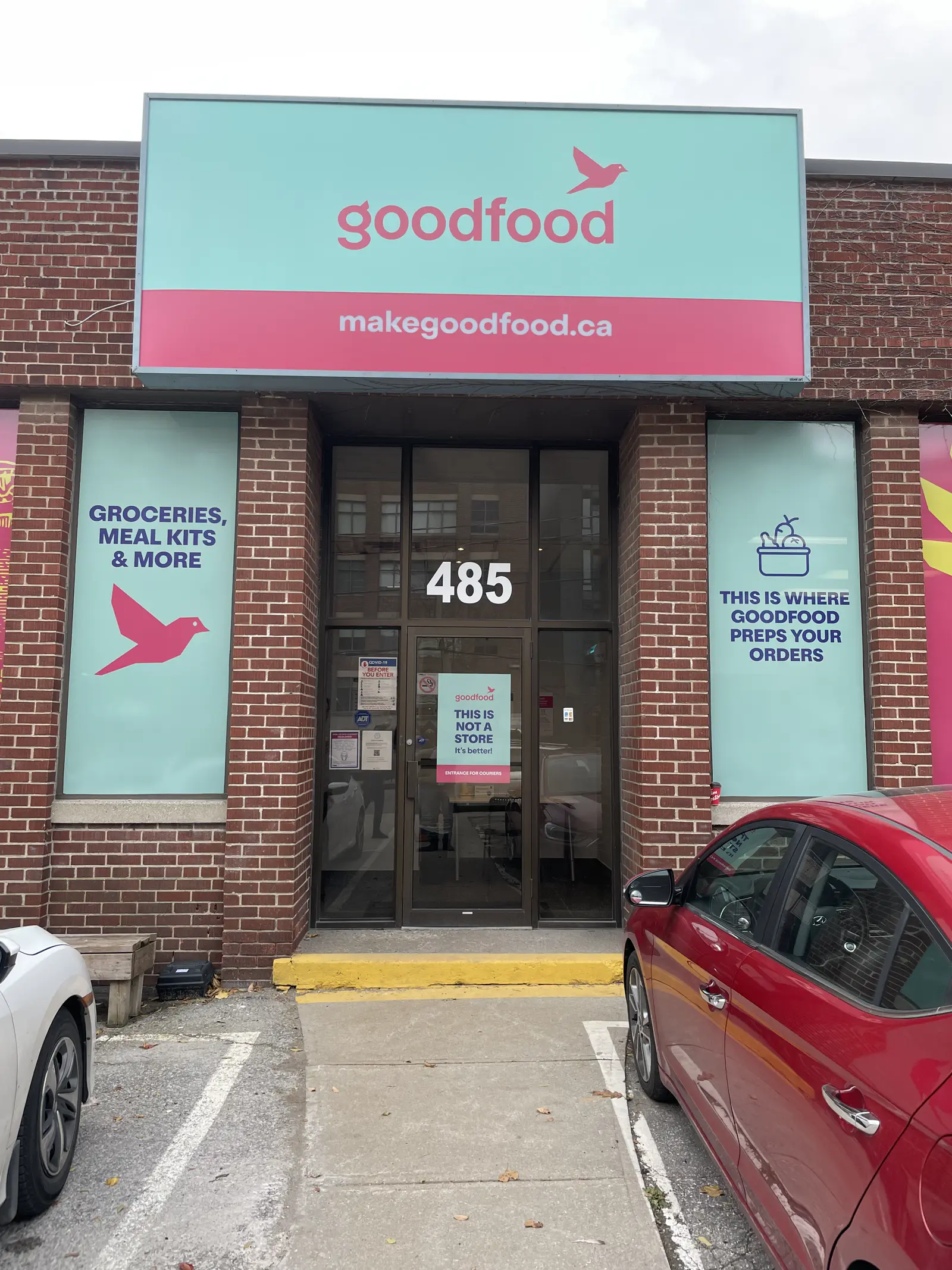
    A Goodfood production site, not a retail store
    Goodfood production site
    Maxime on site during construction of a new distribution centre
    One of five facility builds
  5. Chapter 5

    2023 to 2024

    Obius, Montreal

    Obius, small Shopify merchants, and the first software he shipped himself

    He left in 2023 and started consulting again, this time at the opposite end of the size scale. Small direct to consumer Shopify brands in Quebec, the kind of company where the founder is also the operations manager and the person answering the inbox at nine in the evening.

    After six years of $50M capital projects this looks like a step down, and it was the opposite. A small brand has the same problems as a public company with none of the padding. There is no analyst to rebuild the forecast and no second person to absorb the mistake, so the mechanics are visible without having to go looking for them. The pattern from the third Deloitte lesson was right there again, at a fortieth of the size.

    Two partnerships started that year and both still matter: Shopify, and Katana MRP. So did the first piece of software he shipped rather than specified. StockHero was a Shopify app for inventory management, forecasting demand and telling a merchant when to reorder, so a small brand could stop tying up cash in the wrong stock and stop losing sales on the right stock. Around fifteen businesses were using it by the middle of 2024, several of them in Quebec, including Soja&Co, who is still a client today.

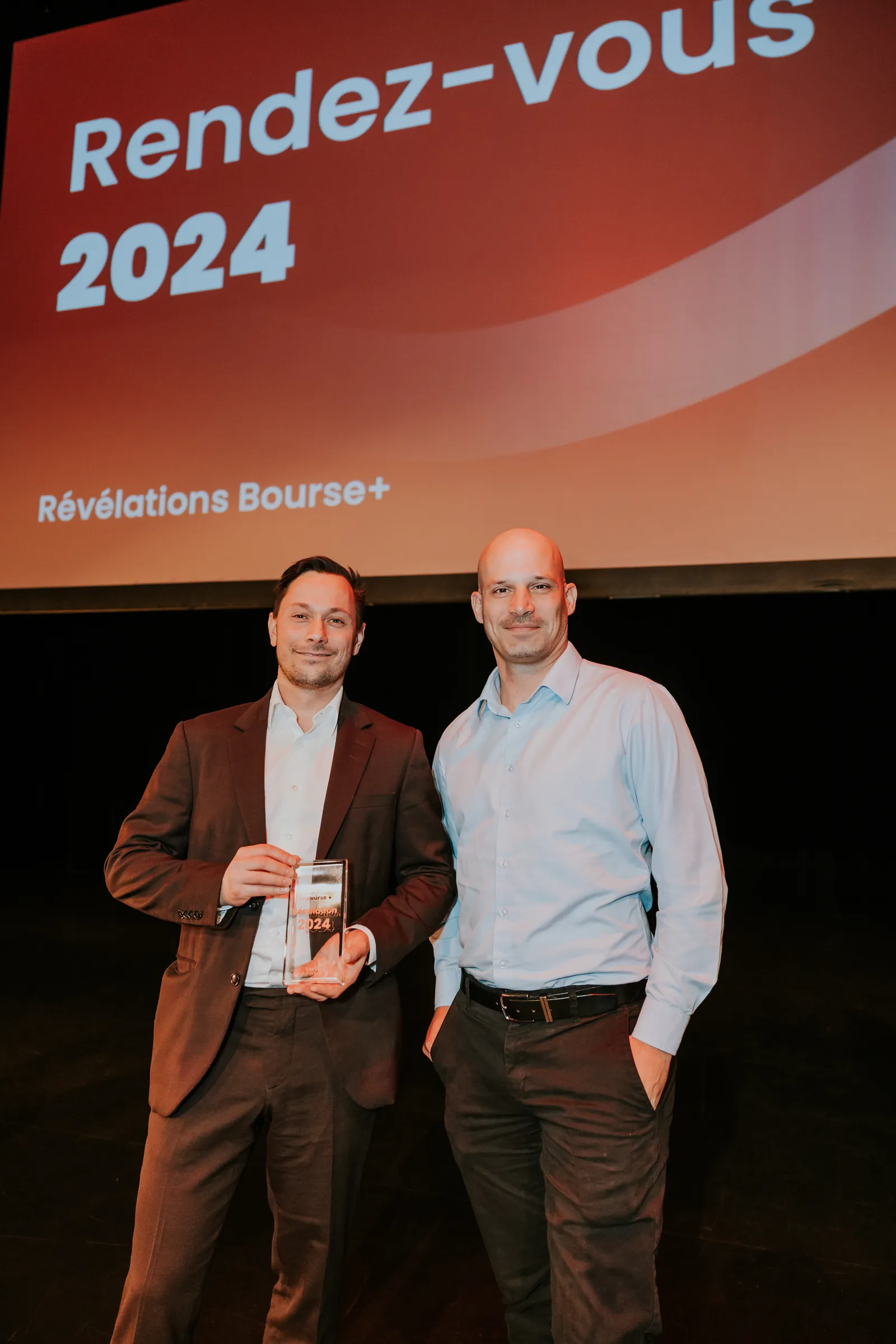
    Québec Tech selected Obius as one of twenty startups in its Bourse+ cohort that year. That was the first time somebody outside the building bet on this.

    Clients
    Small direct to consumer Shopify brands, mostly in Quebec. Soja&Co started in this period and is still with us.
    Partnerships
    Shopify Partner and Katana MRP partner, both of which the consulting practice still runs on.
    First product
    StockHero, a Shopify inventory app that forecast demand and timed reorders. Around fifteen merchants by mid 2024.
    Recognition
    One of twenty startups selected for the Bourse+ program at Québec Tech, 2024.
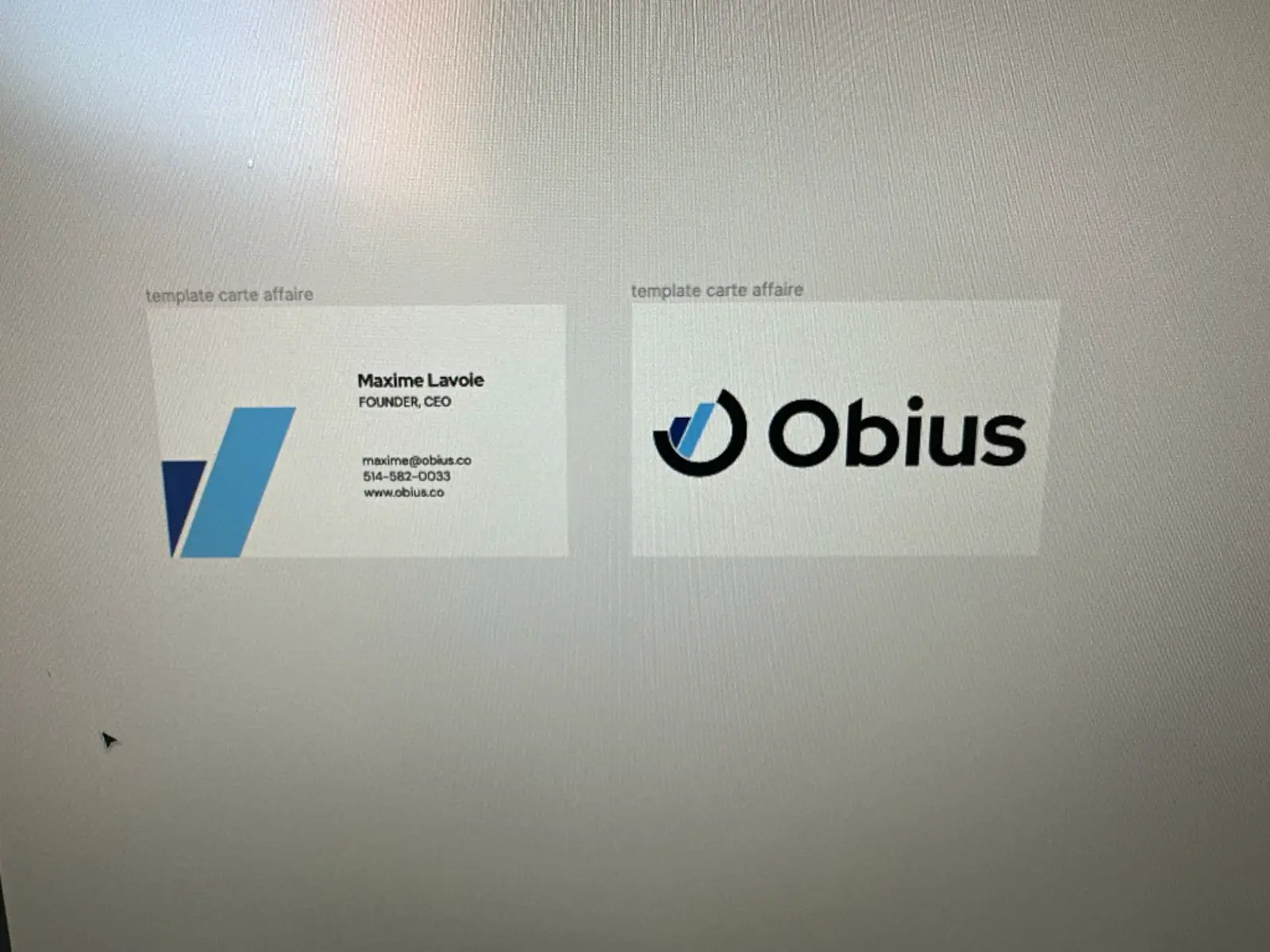
    The first Obius business card and mark, on screen
    Obius, the first identity
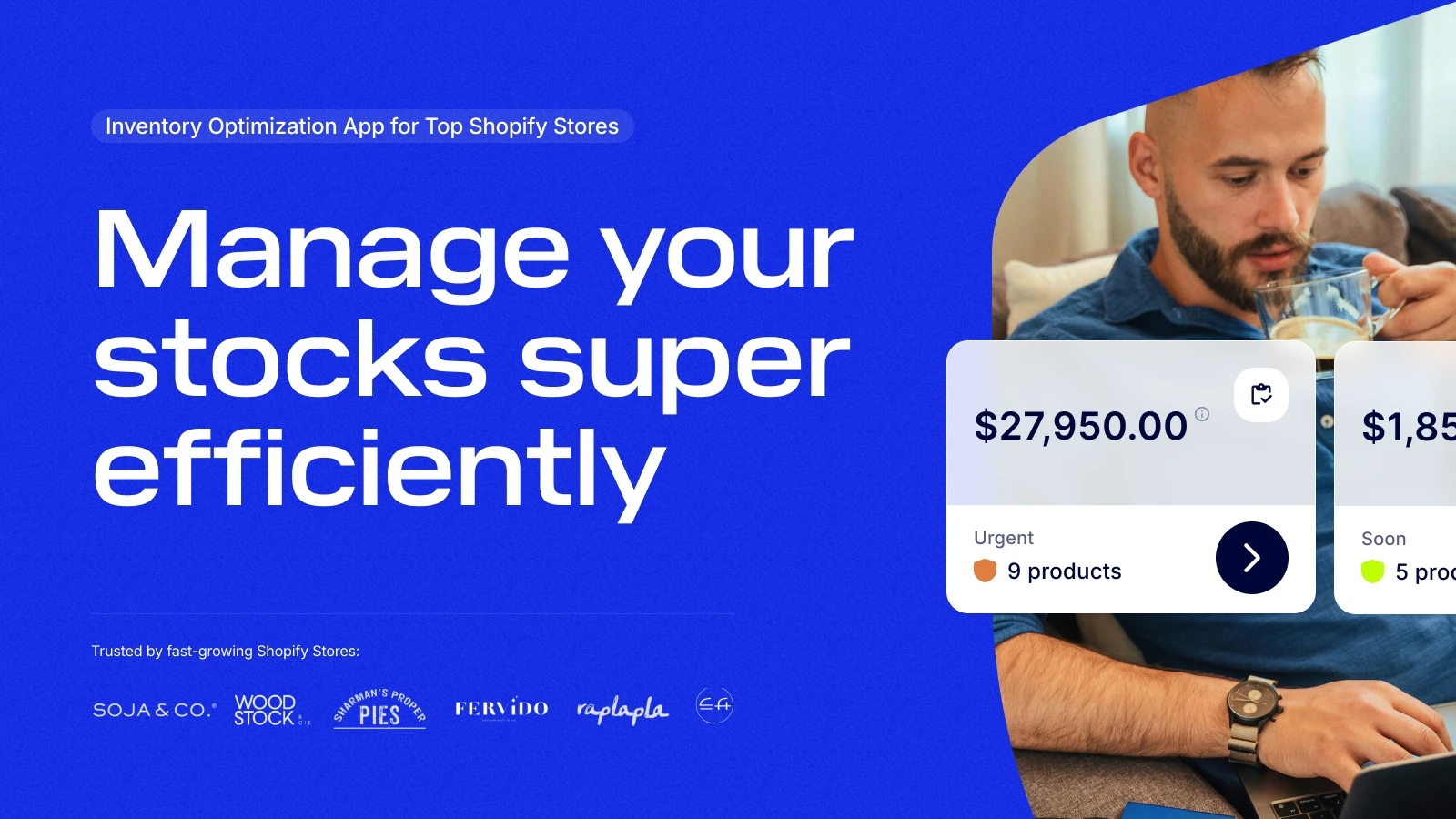
    The StockHero inventory forecasting app on screen
    StockHero, first product
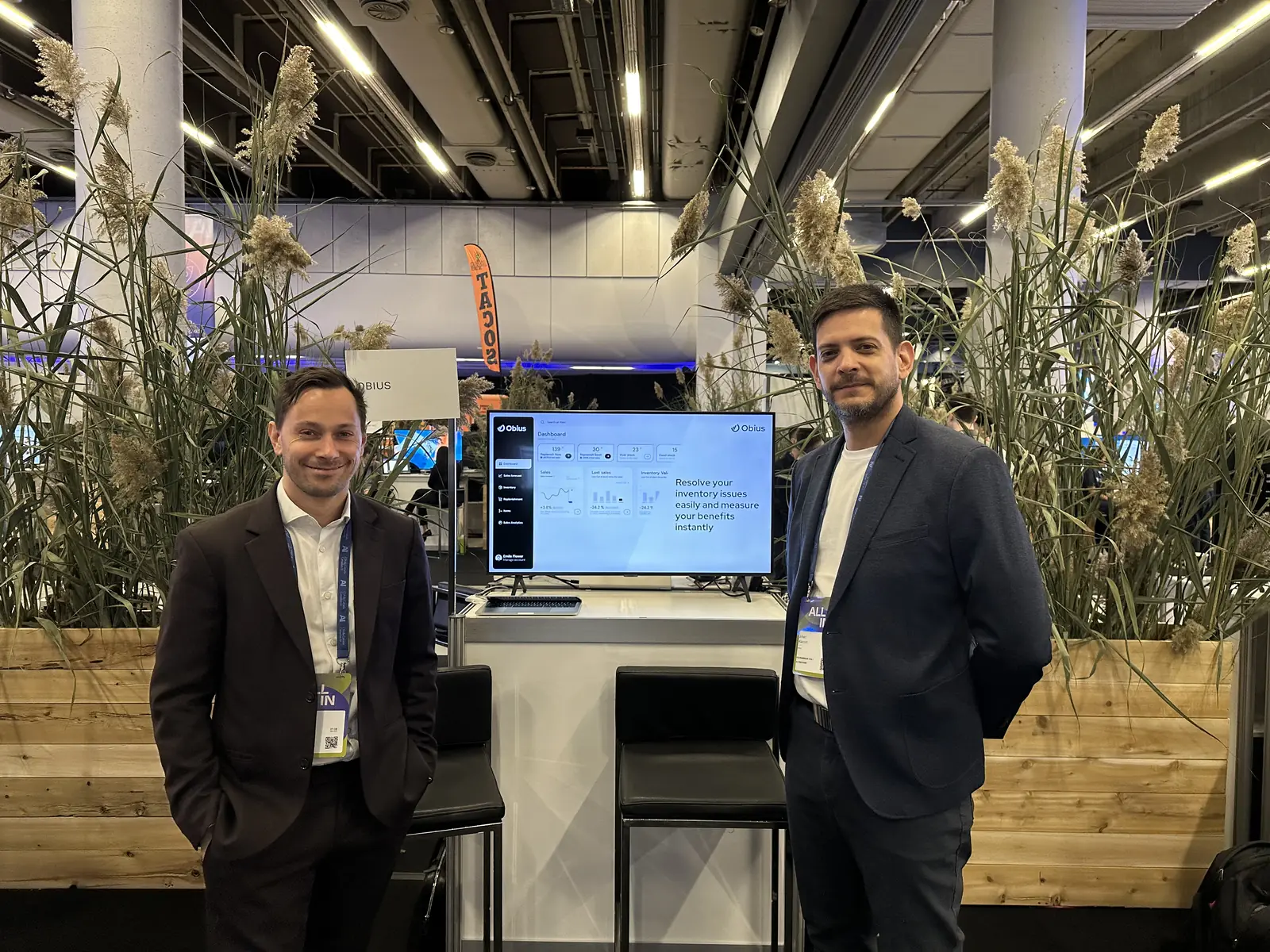
    Maxime at the first ALL IN, September 2023
    Maxime at the first ALL IN, September 2023
    Maxime Lavoie receiving the Bourse+ award at the Startup Montreal Rendez-vous 2024 gala
    Maxime at Startup Montreal, Bourse+ 2024
  6. Chapter 6

    2024 to now

    LevelOps, Place Victoria, Montreal

    LevelOps, the same problem one size up, and a product instead of a workaround

    The shift started in 2024 and the name caught up in April 2025. Obius became LevelOps: same team, same idea, a word that says what the work is for. Levelling up an operation with technology.

    The clients changed size and industry. Manufacturers, distributors and wholesalers instead of small consumer brands. B2B instead of direct to consumer. The engagements got heavier with them: full ERP and MRP implementations, Shopify Plus builds, and integrations between systems that were never designed to speak to each other.

    And in every one of those engagements, the same step. The one from the third Deloitte lesson, the one that had been on the receiving end at Goodfood, the one every implementation plan quietly assumed somebody else would handle. Orders arriving as PDFs and spreadsheets, retyped by a person. So we built PDF to Order, which is the story at the top of this page.

    An implementation practice gives you thirty operations in outline where an operating role gives you one in high resolution, and outline is the resolution at which a pattern becomes visible. One company retyping orders out of an inbox is a staffing decision. Every company doing it, in industries with nothing else in common, is a category of work that nobody had pointed software at.

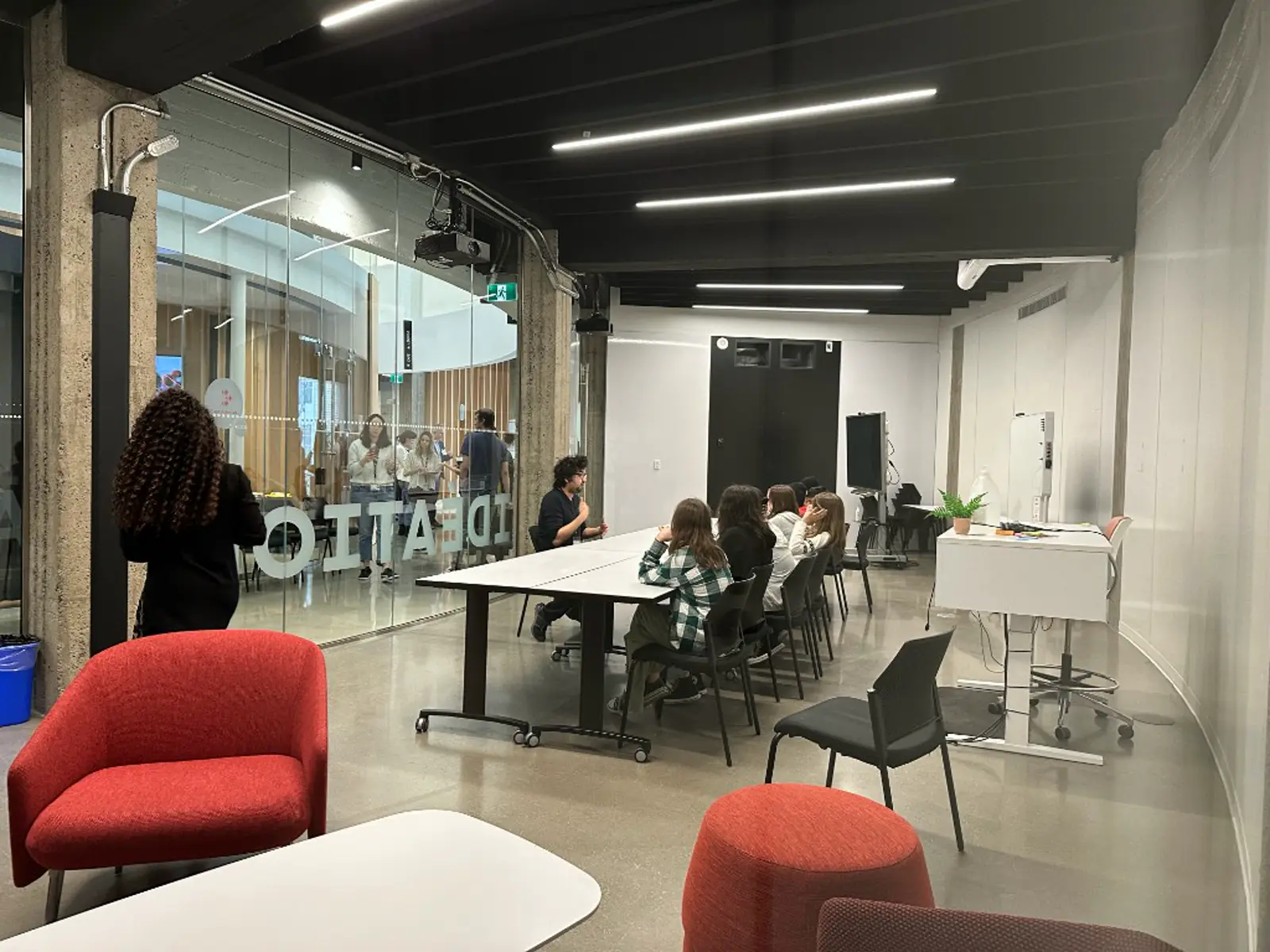
    The rest is address and paperwork, though both say something. We work out of Ax.c at Place Victoria, the innovation campus built by ÉTS and Centech on the Montreal Exchange's former trading floor, where orders used to be shouted across a room and now arrive as email attachments. Québec Tech carries us on its roster of innovative companies. Desjardins selected us for Startup en Résidence.

    Fifteen years, four settings, one question.

    The rename
    Obius became LevelOps publicly in April 2025. Same team, same vision, a name that describes the work.
    Who we serve
    Manufacturers, distributors and B2B wholesalers in Canada, the United States and Europe, in English and French.
    The work
    ERP and MRP implementations, Shopify Plus builds, system integrations, and PDF to Order on the Shopify App Store.
    Where
    Ax.c, Place Victoria, on the former trading floor of the Montreal Exchange.
    Backing
    Québec Tech, the National Research Council of Canada, and selected by Desjardins for Startup en Résidence.
    Still true
    Both halves run together. The people building the product are currently inside somebody's operation, and the people consulting have to live with what they ship.
    The LevelOps workspace at Ax.c in Place Victoria
    Ax.c, Place Victoria
    The LevelOps team working together in Montreal
    The team today
    A client manufacturing site during an ERP implementation
    On a client site
    PDF to Order running on a merchant's screen
    PDF to Order, in production

Photographs from each of these periods are being pulled out of personal archives and will fill the frames above as they surface. The captions are the shortlist. The files Max sent on 2026-09-12 (Deloitte, Goodfood, Obius) and on 2026-09-13 (the sugar shack exterior, father at the evaporator, his mother's garden, tree planting) are in the frames that have a photograph. Chapter 2 is still waiting on the archive.

What stayed constant

The same question in every one of those jobs

Four settings, one question: where does the time actually go, and what does it cost. Industrial engineering asks it about a line. Consulting asks it about a distribution network. An operating role asks it about your own team, which is harder, because the answer is usually a decision you made yourself. A software product asks it about one step, repeatedly, on real files.

The habits that survived all four are unglamorous. Measure before changing anything, because the bottleneck is rarely where the meeting says it is. Decide the process before buying the tool. Assume the data is dirtier than the demo. Keep a person on the last step of anything that is expensive to get wrong. And be willing to tell someone their problem is not the one you sell, which is only affordable if you can help them a second way.

That is the whole story. Fifteen years of asking a manufacturer or a retailer where their time goes, and one piece of software written because the answer kept being the same.

The people who built it

Operations and technology, deliberately mixed. It is why we can sit with a distributor, find where order flow actually breaks, and then ship something that fixes it.

Maxime Lavoie

Maxime Lavoie

CEO

President and founder. Maxime has spent the last 15 years helping manufacturing and retail companies improve their operations and technologies. Former Vice President of Operations at Goodfood and supply chain consultant at Deloitte.

LinkedIn profile for Maxime Lavoie
Thierry Ferland

Thierry Ferland

CTO

Thierry specializes in automation and system integration. Former CTO of La Récolte, a French farm to table retailer, he develops technological solutions that improve the efficiency of manufacturing and retail businesses.

LinkedIn profile for Thierry Ferland
Mathieu Magri

Mathieu Magri

AI Solutions Engineer

Mathieu develops and fine-tunes the AI models behind product matching and document processing, turning messy real world purchase orders into something a catalogue can be matched against.

LinkedIn profile for Mathieu Magri

The proof we care about

Not awards. What operators say after the thing has been running in their business for a while.

Up to 3h/day
Given back to customer service
For me, LevelOps is the first easy step into AI, relevant, and you see the impact the day you install it.
The Unscented Company
Beauty and CPG
4x
Faster processing, manual entry down to under 10%
About 60% of our orders come to us as PDFs and other file types attached to emails. Before adopting LevelOps, our team spent considerable time manually processing orders by moving information from disparate customer files into Shopify.
Scrub Authority
Apparel and uniforms
10x
More efficient on emailed orders
An absolute timesaver. We have been manually entering B2B orders into Shopify for 6 years and I am convinced that I would be 3 years ahead if I found this app sooner. This just made us 10x more efficient.
Terpene Warehouse
Distribution
Day 1
Documentation handled automatically
It would require a full-time person just doing documentation in Excel to match what is automatically taken care of in Katana.
Wholesale distributor
Distribution

Where we are now

The two halves of the business still run side by side. We implement ERP, MRP and Shopify systems for manufacturers and distributors, and we ship PDF to Order for merchants who need their order intake to stop consuming people. Working in both keeps us honest: the product gets built by people who are currently inside somebody's operation, and the consulting gets done by people who have to live with what they build.

PDF to Order holds a 5.0 rating on the Shopify App Store and Built for Shopify status, and it works with Shopify B2B catalogues and company specific price lists. Approved orders sync onward to QuickBooks, Odoo and Katana MRP, because the point was never to become another system of record.

We are still a small team in Montreal, working in English and French. The ambition is not to be a platform. It is that a wholesaler somewhere stops paying a person to retype what a buyer already typed, and gets that person's week back for work that actually needs a human.

Backed by

Programs and institutions that have supported the company with funding, advice or access to their network. None of them owns the product roadmap, which is worth saying plainly. The industry associations we belong to and the firms we refer work to are on the partners page.

Questions about the story

Who founded LevelOps, and what did he do before it?

Maxime Lavoie, founder and CEO. Industrial engineer by training, then six years of supply chain consulting at Deloitte serving retailers such as ALDO, Loblaws, Metro and Walmart, then VP Operations and later VP Engineering at Goodfood Market (TSX: FOOD), where sales scaled from $23M in fiscal 2017 to $379M in fiscal 2021. The order intake problem the product solves is one he handled from the operating side long before there was software for it.

Why does the first chapter start before 2006?

Because the instincts were set before any of the jobs. The first operations he worked in were a family sugar bush that ran on a spring deadline and no software at all, and the cutblocks of Western Canada, where he planted trees before university. The later chapters are the same question, where does the time actually go, asked in larger rooms.

What happened to Obius?

Obius is the same company under its previous name. It ran from 2023 as a consultancy for small direct to consumer Shopify brands and shipped StockHero, a Shopify inventory forecasting app. The rename to LevelOps became public in April 2025, when the client base had shifted to manufacturers, distributors and B2B wholesalers. Same team, same registered company, a name that describes the work. Obius Inc. is still the legal entity behind LevelOps.

What does a meal kit company have to do with an order automation app?

Everything, in the order it happened. As VP Operations and later VP Engineering at Goodfood Market, the founder ran a fast growing food manufacturer on Alteryx automation scripts and spreadsheets until an ERP went in at roughly $250M of annual revenue. He was on the receiving end of documents that arrived in whatever format the sender used and had to be keyed in by a person. PDF to Order is that same problem solved from the other side of the transaction, for the wholesaler doing the typing.

Where is how you work, and what you believe?

On the company page. This page is the career that produced the company. That one is the practice, the method and the six positions we have taken.

Tell us how your orders arrive

We will map the flow, put numbers on the manual steps, and tell you plainly whether automation is your bottleneck. If it is not, we will say so.

Montreal based. English and French. No pitch, no commitment.